Fathom vs Otter vs Fireflies: The Best AI Meeting Assistants for 2026
The best AI meeting assistant depends on your core workflow:...

Make email marketing simplified

Make email marketing simplified

Make email marketing simplified

Make email marketing simplified

Make email marketing simplified

Make email marketing simplified

Make email marketing simplified

Make email marketing simplified

Make email marketing simplified

Make email marketing simplified

Make email marketing simplified

Make email marketing simplified

Make email marketing simplified

Make email marketing simplified

Make email marketing simplified

We use cookies for our website to give you the most relevant experience by remembering your preferences. By clicking “accept”, you consent to use of ALL the cookies
This website uses cookies to improve your experience while you navigate through the website. Out of these, the cookies that are categorized as necessary are stored on your browser as they are essential for the working of basic functionalities of the website. We also use third-party cookies that help us analyze and understand how you use this website. These cookies will be stored in your browser only with your consent. You also have the option to opt-out of these cookies. But opting out of some of these cookies may affect your browsing experience.
Necessary cookies are absolutely essential for the website to function properly. These cookies ensure basic functionalities and security features of the website, anonymously.
| Cookie | Duration | Description |
|---|---|---|
| cookielawinfo-checkbox-functional | 11 months | This cookie is set by GDPR Cookie Consent plugin. The cookie is used to store the user consent for the cookies in the category “Analytics”. |
| cookielawinfo-checkbox-functional | 11 months | The cookie is set by GDPR cookie consent to record the user consent for the cookies in the category “Functional”. |
| cookielawinfo-checkbox-necessary | 11 months | This cookie is set by GDPR Cookie Consent plugin. The cookies is used to store the user consent for the cookies in the category “Necessary”. |
| cookielawinfo-checkbox-others | 11 months | This cookie is set by GDPR Cookie Consent plugin. The cookie is used to store the user consent for the cookies in the category “Other. |
| cookielawinfo-checkbox-performance | 11 months | This cookie is set by GDPR Cookie Consent plugin. The cookie is used to store the user consent for the cookies in the category “Performance”. |
| viewed_cookie_policy | 11 months | The cookie is set by the GDPR Cookie Consent plugin and is used to store whether or not user has consented to the use of cookies. It does not store any personal data. |
Functional cookies help to perform certain functionalities like sharing the content of the website on social media platforms, collect feedbacks, and other third-party features.
Performance cookies are used to understand and analyze the key performance indexes of the website which helps in delivering a better user experience for the visitors.
Analytical cookies are used to understand how visitors interact with the website. These cookies help provide information on metrics the number of visitors, bounce rate, traffic source, etc.
Advertisement cookies are used to provide visitors with relevant ads and marketing campaigns. These cookies track visitors across websites and collect information to provide customized ads.
Other uncategorized cookies are those that are being analyzed and have not been classified into a category as yet.
Cyberia Tech, Inc. respects your privacy. This Privacy Policy explains how we collect, use, and share your information. By using our services, you agree to this policy. If any other agreements conflict with this Privacy Policy, the terms of those agreements prevail.
Cyberia Tech complies with the EU-US and Swiss-US Privacy Shield Frameworks for handling personal data from the EEA, UK, and Switzerland. In case of any conflict, the Privacy Shield Principles prevail. Learn more at Privacy Shield. Key Definitions
Information linked to an individual, transferred from the EEA, UK, or Switzerland to the U.S.
Data revealing race, religion, health, sexual orientation, and similar categories.
Effective Date: [ 2026 / 10 / 22 ]
Welcome to The Cyberia Tech ! By accessing or using our website or services, you agree to
comply with and be bound by these Terms of Use and our Privacy Policy. If you do not agree with
these terms, please do not use our Services.
Loading
0 %
Your First Piece of the Puzzle in
Business Growth



In modern enterprise operations, off-the-shelf software often creates more bottlenecks than it resolves. Custom Crm Development provides a strategic alternative, allowing organizations to engineer data management platforms that perfectly map to their unique internal workflows. By investing in a bespoke architecture, businesses eliminate the friction of rigid third-party data models and unlock unprecedented operational agility.
The decision to build rather than buy is driven by the need for absolute control over proprietary data and customer interactions. Generic customer relationship management tools force businesses to adapt their established processes to the software’s limitations. Conversely, custom-built solutions adapt to the business, seamlessly integrating with existing enterprise resource planning (ERP) systems and driving significant long-term ROI. For insights on navigating this transition, consider our analysis in Modernizing the Enterprise: A Guide to Bespoke Software Migration.
When organizations reach a certain scale, the cost of modifying commercial SaaS platforms to fit complex use cases often exceeds the cost of ground-up development. Custom Crm Development is fundamentally about owning your technological destiny. A custom architecture allows enterprise architects to design optimized database schemas that specifically support the company’s most critical queries and reporting requirements, without the bloat of unnecessary generic features.
Furthermore, bespoke solutions provide a substantial competitive advantage. If your organization operates in a highly specialized industry—such as aerospace manufacturing or bespoke logistics—standard software simply cannot capture the nuances of your sales cycles or compliance requirements. Building a custom system ensures that every data point captured directly contributes to actionable business intelligence.
Security is another paramount consideration that drives enterprises toward proprietary development. Off-the-shelf platforms are lucrative targets for widespread cyberattacks. A custom-built CRM, hosted on dedicated infrastructure with stringent, tailor-made access controls, significantly reduces the attack surface and ensures compliance with strict data sovereignty regulations.
A primary failure point of generic software is its inability to communicate effectively with legacy enterprise systems. Modern businesses run on a complex web of disparate applications, from specialized accounting software to proprietary inventory management tools. Custom CRM development approaches this challenge by designing integration-first architectures, utilizing robust, secure APIs built specifically for the organization’s existing tech stack.
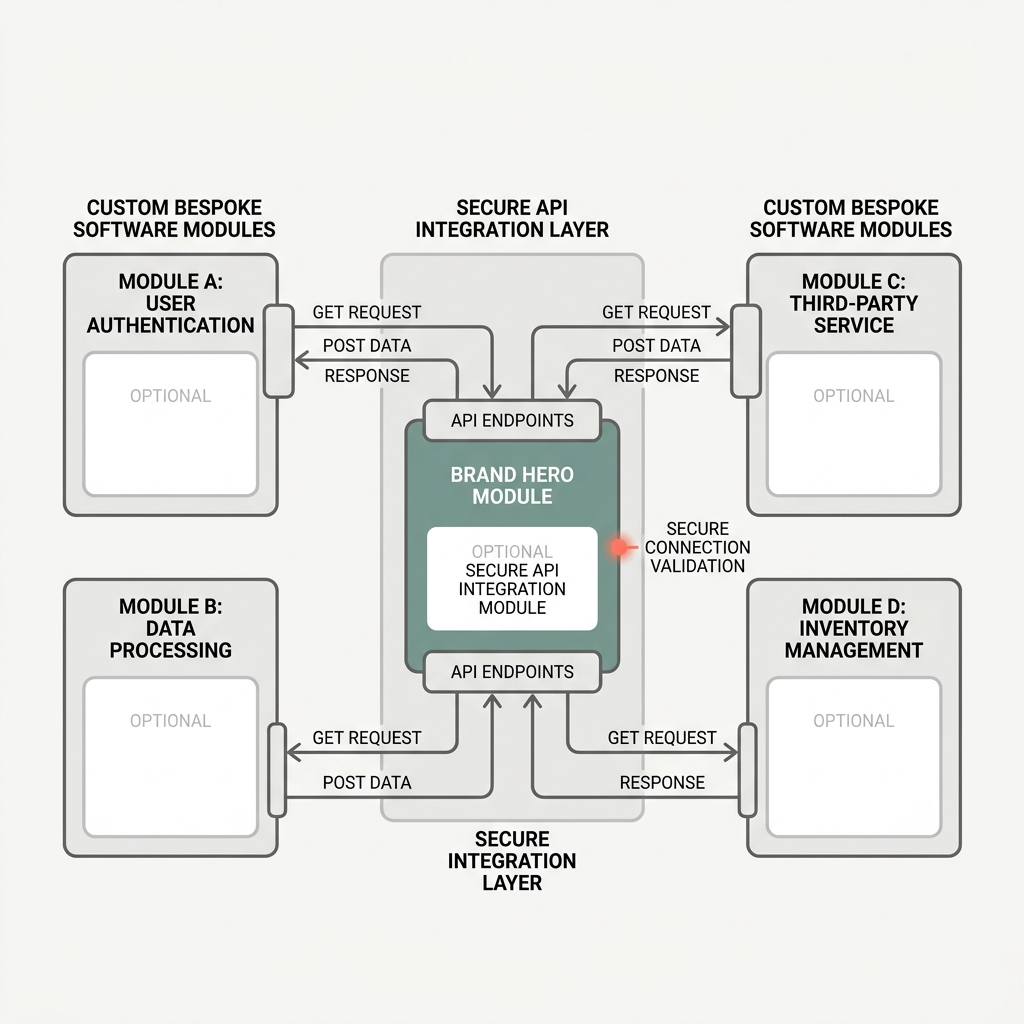
This seamless data flow eliminates the need for manual data entry and brittle middleware solutions. When sales data automatically synchronizes with supply chain logistics in real-time, leadership gains a truly holistic view of organizational health. This level of synchronization is rarely achievable with out-of-the-box connectors provided by mass-market software vendors.
Moreover, integration extends beyond internal systems. Enterprises increasingly rely on external data streams, such as real-time market feeds or advanced predictive analytics APIs. A bespoke CRM can be engineered to ingest and process these diverse data types natively, transforming raw information into immediate strategic insights. Understanding the limitations of generic solutions is vital, as discussed in Custom vs. Off-the-Shelf Software: Pros And Cons.
The most technically advanced software is useless if the workforce refuses to adopt it. Poor user experience (UX) is the leading cause of failed software deployments in large organizations. Custom CRM development allows design teams to conduct rigorous user research, mapping the exact daily routines of the sales, marketing, and support staff who will rely on the tool.
This user-centric approach results in interfaces that are radically simplified compared to feature-heavy commercial alternatives. By surfacing only the data and actions relevant to a specific user’s role, cognitive load is minimized, and efficiency skyrockets. Training time is drastically reduced because the software intuitively mirrors the employee’s existing mental model of their workflow.
Additionally, bespoke development allows for rapid, iterative improvements based on actual internal feedback. Instead of waiting for a commercial vendor to prioritize a feature request on their global roadmap, the internal development team can rapidly deploy updates that directly address the immediate needs of their workforce, fostering a culture of continuous improvement.
The true power of a proprietary system lies in its ability to automate highly specific, multi-step business processes. Generic workflow engines are often too rigid to handle the conditional logic required by specialized enterprises. Through Custom Crm Development, engineers can build robust automation rules deeply embedded into the application’s core logic.
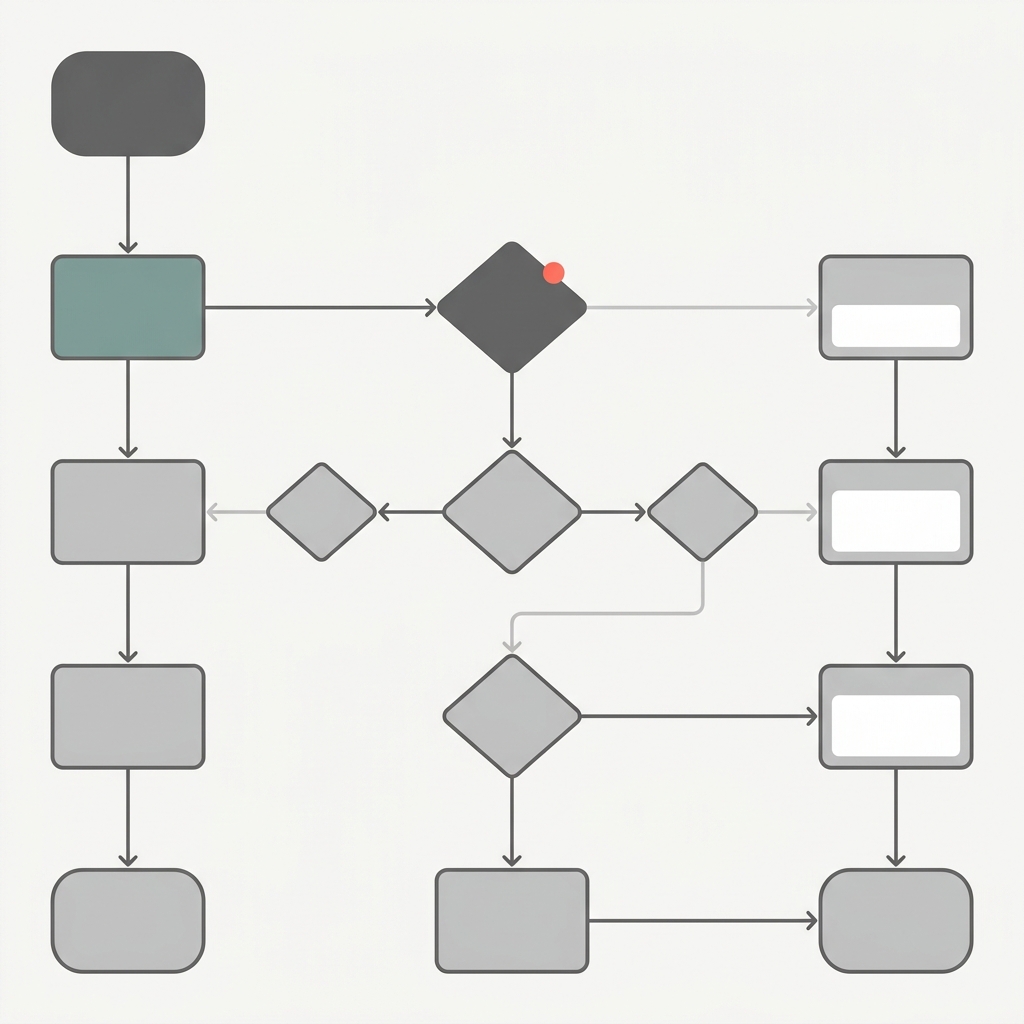
For example, a bespoke system can automatically trigger a complex legal review process, allocate inventory, and generate highly customized contracts the moment a sales representative updates a specific opportunity stage. This level of deeply integrated automation eliminates manual hand-offs, drastically reduces human error, and accelerates the entire revenue cycle.
Furthermore, custom automation extends to proactive alerting and exception handling. The system can be programmed to identify anomalies—such as a sudden drop in engagement from a key enterprise account—and immediately notify the appropriate stakeholders with actionable contextual data, preventing issues before they impact the bottom line.
Enterprise growth is rarely linear. As an organization expands into new markets or acquires competitors, its data infrastructure must scale seamlessly. Commercial CRM licensing models often penalize growth, with costs escalating exponentially as user counts and data volumes increase. A custom-built solution changes this financial dynamic.
By leveraging modern, scalable cloud architectures—such as microservices and serverless computing—a bespoke CRM can handle massive spikes in activity without requiring complete system overhauls. The underlying infrastructure can dynamically allocate resources based on real-time demand, ensuring consistent performance during critical operational periods.
Finally, owning the codebase guarantees that the software will never be unexpectedly deprecated or subjected to forced, disruptive upgrades by a third-party vendor. The enterprise dictates the product roadmap, ensuring the technology stack continuously aligns with long-term strategic objectives and remains a durable asset rather than a recurring operational expense.
It is the process of engineering a proprietary customer relationship management system specifically tailored to an organization’s unique workflows, rather than purchasing a pre-built, generic software license.
Bespoke solutions offer absolute control over data sovereignty, perfect alignment with complex internal processes, superior integration capabilities with legacy systems, and freedom from escalating licensing fees.
Depending on complexity and scale, initial development for a Minimum Viable Product (MVP) typically ranges from four to eight months, followed by continuous iterative enhancements based on user feedback.
Yes, proprietary codebases present a smaller attack surface than widely distributed commercial platforms. Custom solutions also allow for stringent, customized access controls and dedicated hosting environments.
The transition from rigid commercial platforms to a proprietary ecosystem represents a significant strategic milestone for any large organization. While Custom Crm Development requires a substantial initial investment of time and resources, the long-term benefits are undeniable. By eliminating workflow bottlenecks, securing proprietary data, and enabling deep, customized automation, a bespoke platform transforms software from a generic operational expense into a powerful, differentiating business asset. Ultimately, enterprises that choose to engineer their own solutions are not just building software; they are building a scalable, future-proof foundation for sustained market leadership and operational excellence.
You Can Get More Information!