Fathom vs Otter vs Fireflies: The Best AI Meeting Assistants for 2026
The best AI meeting assistant depends on your core workflow:...

Make email marketing simplified

Make email marketing simplified

Make email marketing simplified

Make email marketing simplified

Make email marketing simplified

Make email marketing simplified

Make email marketing simplified

Make email marketing simplified

Make email marketing simplified

Make email marketing simplified

Make email marketing simplified

Make email marketing simplified

Make email marketing simplified

Make email marketing simplified

Make email marketing simplified

We use cookies for our website to give you the most relevant experience by remembering your preferences. By clicking “accept”, you consent to use of ALL the cookies
This website uses cookies to improve your experience while you navigate through the website. Out of these, the cookies that are categorized as necessary are stored on your browser as they are essential for the working of basic functionalities of the website. We also use third-party cookies that help us analyze and understand how you use this website. These cookies will be stored in your browser only with your consent. You also have the option to opt-out of these cookies. But opting out of some of these cookies may affect your browsing experience.
Necessary cookies are absolutely essential for the website to function properly. These cookies ensure basic functionalities and security features of the website, anonymously.
| Cookie | Duration | Description |
|---|---|---|
| cookielawinfo-checkbox-functional | 11 months | This cookie is set by GDPR Cookie Consent plugin. The cookie is used to store the user consent for the cookies in the category “Analytics”. |
| cookielawinfo-checkbox-functional | 11 months | The cookie is set by GDPR cookie consent to record the user consent for the cookies in the category “Functional”. |
| cookielawinfo-checkbox-necessary | 11 months | This cookie is set by GDPR Cookie Consent plugin. The cookies is used to store the user consent for the cookies in the category “Necessary”. |
| cookielawinfo-checkbox-others | 11 months | This cookie is set by GDPR Cookie Consent plugin. The cookie is used to store the user consent for the cookies in the category “Other. |
| cookielawinfo-checkbox-performance | 11 months | This cookie is set by GDPR Cookie Consent plugin. The cookie is used to store the user consent for the cookies in the category “Performance”. |
| viewed_cookie_policy | 11 months | The cookie is set by the GDPR Cookie Consent plugin and is used to store whether or not user has consented to the use of cookies. It does not store any personal data. |
Functional cookies help to perform certain functionalities like sharing the content of the website on social media platforms, collect feedbacks, and other third-party features.
Performance cookies are used to understand and analyze the key performance indexes of the website which helps in delivering a better user experience for the visitors.
Analytical cookies are used to understand how visitors interact with the website. These cookies help provide information on metrics the number of visitors, bounce rate, traffic source, etc.
Advertisement cookies are used to provide visitors with relevant ads and marketing campaigns. These cookies track visitors across websites and collect information to provide customized ads.
Other uncategorized cookies are those that are being analyzed and have not been classified into a category as yet.
Cyberia Tech, Inc. respects your privacy. This Privacy Policy explains how we collect, use, and share your information. By using our services, you agree to this policy. If any other agreements conflict with this Privacy Policy, the terms of those agreements prevail.
Cyberia Tech complies with the EU-US and Swiss-US Privacy Shield Frameworks for handling personal data from the EEA, UK, and Switzerland. In case of any conflict, the Privacy Shield Principles prevail. Learn more at Privacy Shield. Key Definitions
Information linked to an individual, transferred from the EEA, UK, or Switzerland to the U.S.
Data revealing race, religion, health, sexual orientation, and similar categories.
Effective Date: [ 2026 / 10 / 22 ]
Welcome to The Cyberia Tech ! By accessing or using our website or services, you agree to
comply with and be bound by these Terms of Use and our Privacy Policy. If you do not agree with
these terms, please do not use our Services.
Loading
0 %
Your First Piece of the Puzzle in
Business Growth



In the rapidly evolving landscape of modern software engineering, monoliths are increasingly becoming a bottleneck for agility and innovation. The transition toward breaking down monolithic backend architectures into discrete, manageable microservices has revolutionized the way we build, deploy, and scale server-side code. However, until recently, the frontend layer—the user interface where customers actually interact with the application—remained largely monolithic. This disparity often leads to massive, unwieldy codebases where a simple UI update requires rebuilding and redeploying the entire frontend application. This is where micro-frontends architecture comes in, offering a strategic paradigm shift to solve this critical scalability issue.
A micro-frontends architecture extends the successful principles of backend microservices directly into the browser. Instead of maintaining a single, colossal Single Page Application (SPA), the frontend is decomposed into smaller, independent features or functional modules. These modules are owned by cross-functional teams, from database to user interface. This architectural style allows large organizations to scale their frontend development across multiple independent teams without tripping over each other, significantly accelerating the time-to-market for new features.
This comprehensive guide dives deep into the strategic benefits, implementation patterns, and practical challenges of adopting a micro-frontends architecture. Whether you are leading a massive enterprise digital transformation or scaling a rapidly growing startup, understanding how to decouple your frontend monolithic codebase is crucial for maintaining agility, improving code maintainability, and fostering a resilient engineering culture.
At its heart, the micro-frontends architecture is not just a technological choice; it is a profound organizational strategy. It aligns directly with Conway’s Law, which posits that software architectures naturally mirror the communication structures of the organizations that design them. In a traditional monolithic frontend, specialized frontend teams and backend teams are siloed, leading to communication overhead and integration bottlenecks. Micro-frontends dismantle these silos by enabling vertical, cross-functional teams.
Each vertical team owns a specific business domain or feature—for example, a product catalog, a shopping cart, or a user profile. Because they own the entire stack, they can choose the best technological tools for their specific problem, develop features autonomously, and deploy their frontend module independently of other teams. This autonomy drastically reduces coordination meetings and release friction, resulting in a more agile and responsive development lifecycle.
Furthermore, this modularity inherently isolates failures. If the product recommendation engine’s frontend module crashes, it does not bring down the entire e-commerce site; the rest of the application continues to function normally. This level of resilience is paramount for large-scale web applications where uptime directly translates to revenue and customer satisfaction.
The primary driver for adopting a micro-frontends architecture is scalability—not just technical scalability in handling traffic, but organizational scalability in managing hundreds of developers contributing to a single application. As engineering teams grow, a monolithic frontend quickly becomes a major liability, characterized by slow build times, complex merge conflicts, and terrifying deployment processes.
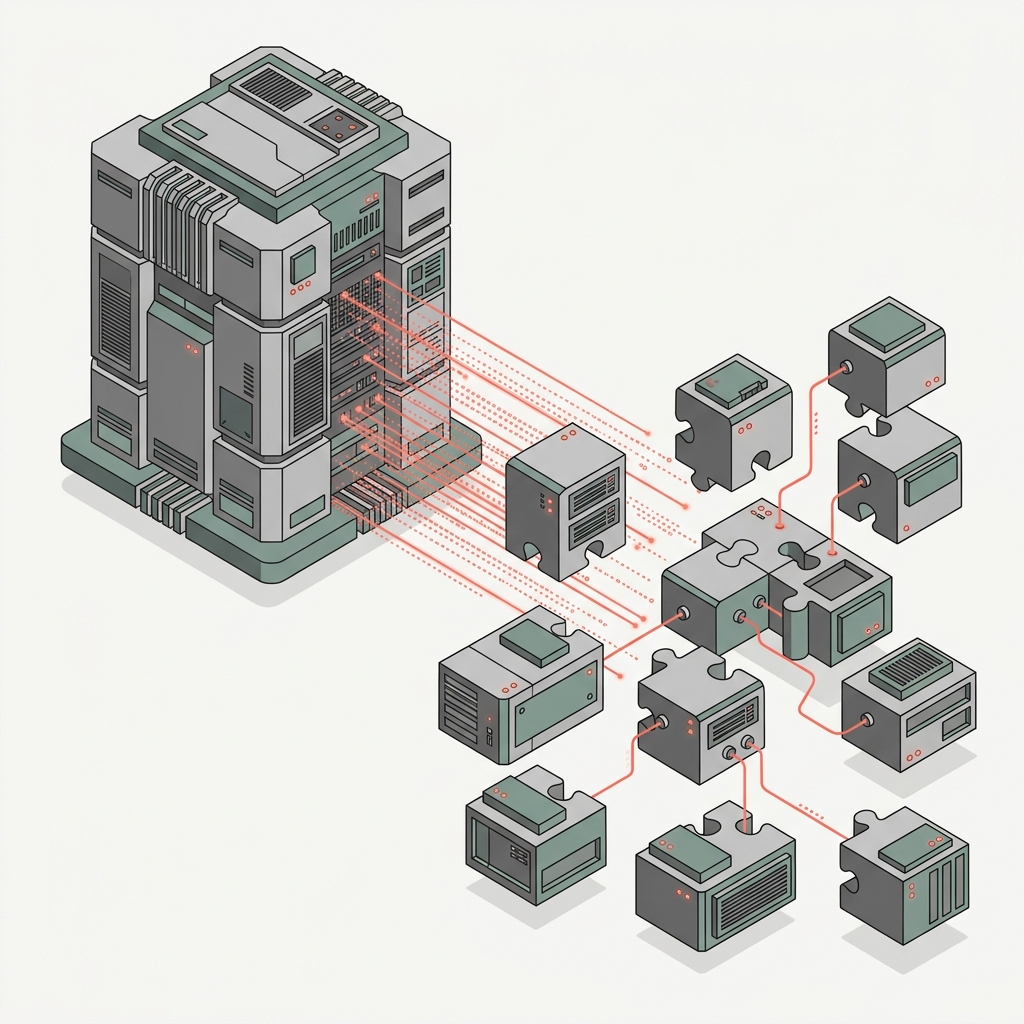
Independent deployment is arguably the most significant advantage. Teams can release updates to their specific feature module at any time without waiting for a coordinated, massive release window. This continuous delivery capability allows for faster iteration, A/B testing, and immediate bug fixes. It empowers teams to be genuinely agile, moving away from slow, risky “big bang” deployments.
Additionally, micro-frontends facilitate incremental upgrades. In a monolithic SPA, updating a core framework (e.g., migrating from an old version of Angular to a modern React stack) is a monumental, often prohibitive task. With micro-frontends, you can upgrade the application piece by piece. A new feature can be built in the latest framework while legacy code continues to run untouched, preventing complete platform rewrites and reducing technical debt over time. If you are evaluating technologies for your next modular build, you can read our comparison in Best Web Development Frameworks 2025: A Comparison.
Implementing a micro-frontends architecture requires careful consideration of how these independent modules will be integrated into a seamless user experience. There are three primary patterns for integration, each with its own set of trade-offs regarding performance, complexity, and team autonomy.
1. Build-Time Integration (NPM Packages): In this approach, each micro-frontend is published as a separate package (e.g., via NPM) and integrated into a main container application during the build process. While this ensures good performance and a unified bundle, it completely defeats the primary goal of independent deployment. Every time a module is updated, the entire container application must be rebuilt and released.
2. Run-Time Integration via IFrames: Using IFrames is the oldest and simplest method of isolating web components. It provides unparalleled sandboxing for CSS and JavaScript, guaranteeing that styles and scripts from one team will not conflict with another. However, IFrames often introduce significant performance overhead, complicate routing, and make passing data between micro-frontends cumbersome and brittle.
The most modern and highly recommended approach to micro-frontends architecture is run-time integration using tools like Webpack Module Federation. This technique allows independent applications to share code dynamically at runtime without requiring a unified build process or relying on IFrames.
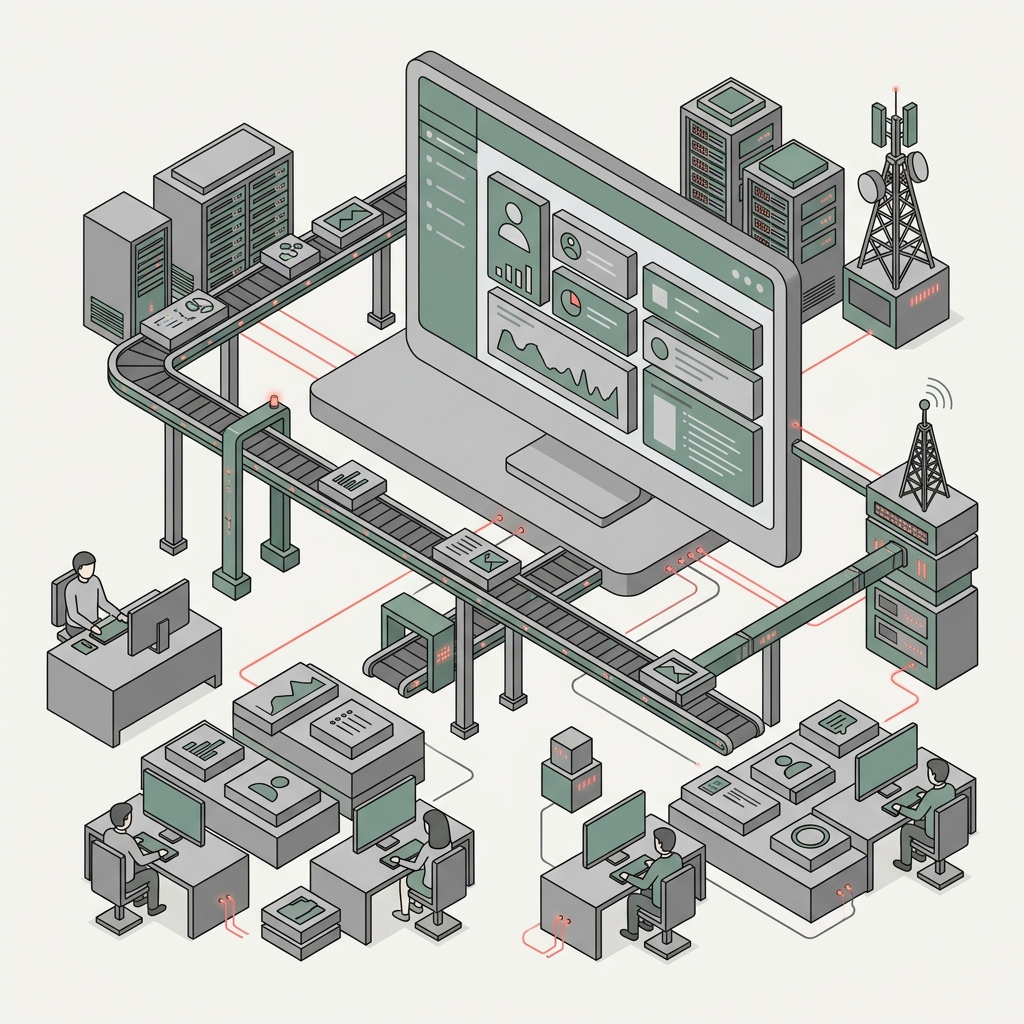
Module Federation enables a “host” application to load remote modules dynamically over the network. If multiple micro-frontends use the same dependency (like React or Lodash), Module Federation intelligently shares that library, preventing the user from downloading the same code multiple times. This approach strikes the perfect balance, offering true independent deployability while maintaining the excellent performance and seamless user experience of a traditional SPA.
Implementing run-time integration requires a robust design system and strict governance. Because modules load dynamically, the container application must gracefully handle scenarios where a remote module fails to load or takes too long, utilizing fallback UIs and error boundaries to prevent a catastrophic user experience.
While a micro-frontends architecture solves many problems related to organizational scaling, it introduces significant complexity in other areas. It is not a silver bullet and should only be adopted when the pain of maintaining a monolith outweighs the architectural overhead of managing a distributed frontend system.
One of the largest challenges is maintaining a consistent user experience. When independent teams build discrete UI components using potentially different frameworks, the final application can easily feel disjointed and fractured. Enforcing a strict, centralized design system—usually manifested as a shared component library—is absolutely critical to ensure visual consistency across all micro-frontends.
Furthermore, operational complexity increases dramatically. You are no longer managing a single frontend deployment pipeline; you are managing dozens. Setting up local development environments that accurately mirror the production container can become difficult. Comprehensive end-to-end testing also becomes significantly more challenging, as you must test the integration of independently moving parts across team boundaries. Understanding how to manage this data and state effectively is critical, much like how data flow is managed in Data-Driven UI/UX Design: Optimizing Web Applications for Conversion.
Adopting a micro-frontends architecture is a powerful strategic move for organizations facing the limitations of large, monolithic web applications. By breaking down the frontend into manageable, independently deployable modules, engineering teams can regain their agility, reduce coordination friction, and build more resilient systems. While the architectural complexity is non-trivial, the resulting organizational scalability and accelerated time-to-market make it an indispensable paradigm for modern enterprise software development.
You Can Get More Information!